Illinois Water Bills Explained: Water, Sewer and the Other Charges
An Illinois water bill can be hard to decode when water, sewer, drainage, garbage, and service fees appear together. The total may also reflect a billing period, meter estimate, or billing arrangement that is not obvious at first glance. Here’s how to separate the charges, check whether the readings make sense, and know whom to contact if something looks wrong.
Start with the account, service address, and billing period
Before comparing your bill with a neighbor’s or trying to explain a change in the total, identify what the bill covers. In Illinois, the company that supplies water, the organization that sends the bill, and the agency that provides sewer service are not always the same.
Check the service address and account holder first. A bill may be addressed to a landlord, property owner, tenant, or homeowners’ association, even if someone else in the household uses the water. The name on the bill matters when asking for account details, payment arrangements, or a review. If you rent and the bill is in the landlord’s name, the utility may limit what it can share with you.
Next, look for the beginning and ending dates of the billing period. A bill that covers more days than usual can be higher even if the household’s daily use has not changed much. A shorter billing period can make the total look lower. Compare charges using the same number of service days where possible, and check whether the reading dates align with the meter readings shown.
Then identify who provides each service. Your water may come from a municipal utility, a private water company, or a larger supplier that sells water to a local utility. Sewer service may be provided by a city, a separate district, or another local agency. Garbage or stormwater charges may come from still another department. The name in the bill header may be the billing office rather than the water supplier.
If you are not sure who supplies your address, How to Find Out Who Supplies Water to Your Illinois Address explains how to trace the service. A bill can also combine charges from more than one provider on a single statement. What a Unified Utility Bill Covers Besides the Water You Use is useful if the bill includes services beyond drinking water and sewer.
A quick first-pass checklist:
- Confirm the service address and account holder.
- Note the billing period and number of days.
- Identify each service listed: water, sewer, stormwater, garbage, or another charge.
- Find the meter reading, reading type, and units.
- Compare the current bill with earlier bills that cover a similar period.
- Check the payment due date and any past-due balance separately from current charges.
Do not assume that every line labeled “water” is a charge for the water consumed during that billing period. Some bills include fixed service charges, adjustments, prior balances, or fees. The bill’s rate schedule or customer-service information should explain how each item is calculated.
Water charges: usage, fixed fees, and rate structures
The water portion of a bill commonly combines a charge for water use with one or more fixed charges. The exact terms and calculations differ among utilities, so use the bill’s own definitions rather than assuming that a line with a familiar label means the same thing everywhere.
Usage charges
A usage charge is based on the amount of water recorded for the account during the billing period. A meter tracks water flowing into a home or building. The bill may show a current reading and a previous reading; subtracting the earlier reading from the later one gives the recorded use, subject to the units and any multiplier printed on the bill.
Units vary. Some bills show gallons, while others use cubic feet or another unit. Check the bill before comparing amounts across providers. A meter reading may also need a multiplier to convert the displayed meter units into billed units. If the bill does not explain the conversion, ask the utility to show how it calculated the usage.
Utilities may use a flat rate per unit, a tiered structure, or a combination of usage charges and other rate components. Under a tiered structure, the price per unit can vary depending on how much water an account uses. A rate schedule may also distinguish among customer types or service areas. Do not try to infer a per-unit rate by dividing the full bill by the water volume if the total includes fixed fees, sewer, or unrelated services.
Fixed service charges
A fixed charge can apply even when water use is low. It may help cover the cost of maintaining the account, meter, pipes, or other parts of the water system. The label can vary, and a bill may show more than one fixed component.
A fixed charge is not necessarily a penalty or evidence that the meter is wrong. It can be a regular part of the rate structure. For that reason, a bill may not drop to zero when a home is vacant or uses very little water. To understand the charge, consult the provider’s published rate information or ask for an explanation of the line item.
Minimums, tiers, and billing adjustments
Some rate schedules include a minimum bill or a base amount of service. Others change the rate after use crosses a threshold. A utility may also make adjustments for a prior billing correction, a meter change, or another account-specific reason.
Keep these distinctions in mind:
| Bill item | What it may represent | What to check |
|---|---|---|
| Water usage | Water recorded by the meter during the billing period | Reading dates, units, multiplier, and rate |
| Service or base charge | A recurring charge not calculated solely from use | Whether it applies each billing period |
| Minimum charge | A minimum amount due under the rate schedule | What level of service or usage it covers |
| Tier charge | A rate that changes at different usage levels | Which usage fell into each tier |
| Adjustment | A correction or account-specific change | The date, reason, and calculation |
| Deposit or account fee | An account-related amount, if applicable | Whether it is refundable or recurring |
The provider’s current rate information is the best place to verify how its rates work. Rates and billing policies can change, so an old bill, a neighbor’s bill, or a rate shown in an older document may not match your account today.
Some Illinois communities bill based on measured use; others may use a non-metered method for some accounts. Those approaches can produce bills that are difficult to compare directly. See Metered vs. Non-Metered Water Billing in Illinois Cities for a closer look at the difference.
Sewer charges and why they may follow water use
Sewer service is often a major part of the total. It is not the same as the water charge: water service delivers treated water to the property, while sewer service covers the collection and handling of wastewater. The organizations providing those services may be separate.
Many sewer bills use water-meter readings as a way to estimate how much wastewater a property sends into the sewer system. That can be a practical billing method, but it does not measure wastewater directly. Depending on the provider, the sewer charge may use the same period of water use, an average from a particular season, a separate meter, or another formula. Some accounts may have a fixed component as well as a usage-based component.
Water used outdoors can create a mismatch. If water is used for lawn watering, filling a pool, or another purpose that does not enter the sewer, the water meter may record that use even though it may not flow into the sewer. Whether a utility offers a seasonal calculation, adjustment, separate meter, or other method varies. Do not assume an adjustment is automatic. Ask the sewer provider what method it uses and whether your property qualifies for a different calculation.
Sewer charges can also be based on a different reading period from the water charge. When dates do not line up, a change in use may appear on the sewer portion later than expected. Review the billing dates and the calculation method before concluding that the sewer amount is wrong. Sewer Charges on an Illinois Water Bill and How They Get Figured covers common billing approaches and the questions to ask about them.
If a bill includes a sewer charge but your property is not connected to a public sewer, or if the sewer provider has changed, contact the billing office to verify the account and service status. A property’s plumbing or septic arrangement does not always tell you what an old account record says. Confirm which service is actually being billed and who is responsible for correcting the record.
A sewer line item may appear under labels such as wastewater, sanitary sewer, or sewer service. Ask the provider to explain the basis of the charge: metered water use, a seasonal average, a fixed rate, or another method. That explanation is especially important if your bill changed after a move, meter replacement, source change, or change in outdoor water use.
Other charges that may appear on the same bill
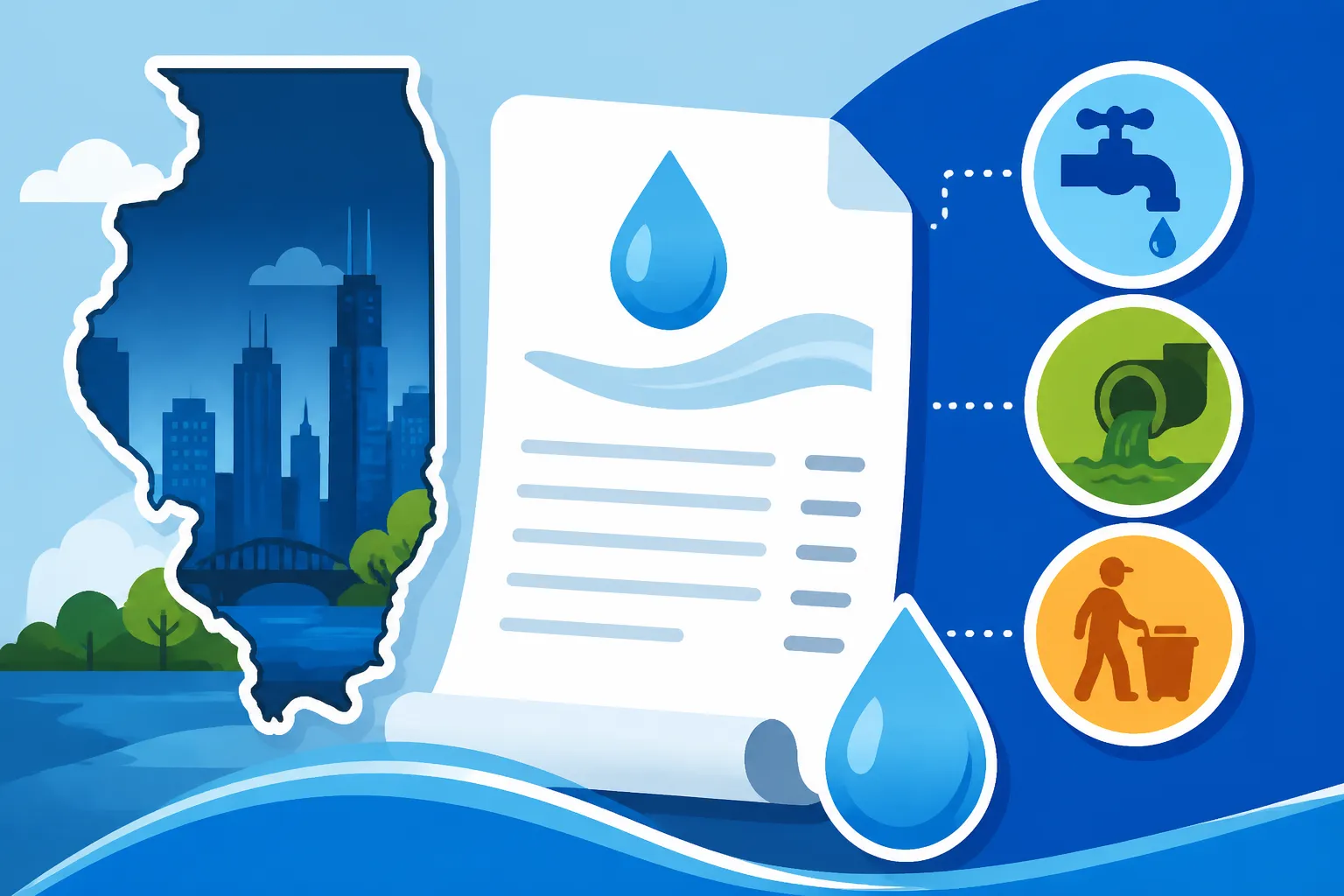
A combined utility statement can include much more than water and sewer. Read the line-item descriptions and look for a separate subtotal or account section for each service. A charge appearing on a water bill is not automatically a water charge.
Stormwater or drainage
Stormwater fees may support drainage infrastructure or related services. A community may calculate them using a fixed amount, property characteristics, or another local method. The charge does not necessarily depend on the amount of water used inside the home. Check the provider’s description of the fee and which properties or services it covers.
Garbage or other municipal services
Some local bills combine water and sewer with garbage collection or other services. If a total rises, check whether the change is in the water section or in a different service section. A new garbage charge, a missed payment, or a change to another service can affect the amount due without any change in household water use.
Taxes, surcharges, and regulatory or system fees
Depending on the provider and service, a bill may include taxes, surcharges, or other fees. Their names and purposes vary. A charge may help fund a specific service or reflect a rate or billing requirement. The bill or provider’s rate information should identify the reason for each item. Ask the billing office which organization sets the charge and whether it is recurring.
Deposits, late charges, and past balances
A total due can include an account deposit, a late charge, a returned-payment fee, or an unpaid amount from an earlier bill. Separate the current charges from the previous balance and payment activity. If you paid recently, check the posting date and whether the payment appears on this statement. A payment can be submitted but not yet reflected in a bill prepared earlier.
Shared service and multi-unit properties
In apartments, two-flats, and other multi-unit buildings, one meter may serve several households. The utility bills the account holder for the meter’s recorded use; a landlord or property manager may then divide that cost among tenants. The allocation method can depend on the lease or other arrangements. A tenant who sees a water amount in a rent statement should ask how it was calculated and whether it includes sewer or other services.
If the utility account is in a landlord’s name, the utility may not be able to provide a tenant with private account details. Start with the landlord or property manager for the bill and the method used to allocate charges. For a shared meter, Splitting a Water Bill on a Shared Meter in an Illinois Two-Flat discusses what can make a household-level calculation difficult.
The key is to trace each line item to a service and a calculation. If the statement does not make that clear, ask the billing office to identify the provider responsible for each charge. A single payment portal or bill header does not always mean one organization controls every service on the statement.
Meter readings, estimates, and sudden increases
A high bill may reflect higher use, a longer billing period, a meter estimate, a rate change, a leak, or a correction to an earlier reading. Start by checking the bill details rather than assuming a specific cause.
Check whether the reading was actual or estimated
Bills commonly identify whether a reading was taken from the meter or estimated. An estimate can be based on earlier use or another billing method. If one bill is estimated and the next is based on an actual reading, the later bill may include the difference between estimated and recorded use. That can make the actual-read bill look unusually high even when the household’s use did not suddenly jump.
Look for labels such as “estimated,” “actual,” or similar wording. Then compare the current reading with the previous reading and note the dates. If the utility says it could not access the meter, ask what happened and how the estimate was calculated. Estimated vs. Actual Meter Readings on an Illinois Water Bill explains why the distinction matters.
Compare the bill with your own meter, if accessible
If you can safely reach the meter, note its reading and compare it with the bill, taking care to use the correct digits and units. Some meters display more digits than the bill uses, and a utility may apply a multiplier. Do not tamper with a meter or open equipment that the utility controls. If the display is unreadable or the location is unsafe, ask the utility how to verify the reading.
A useful check is to record the meter reading, avoid using water for a short period, then check again. If the meter continues to register use when all expected water use is off, that may suggest a leak or a fixture that is still running. This is only a screening step, not a substitute for a plumbing inspection or the utility’s meter review.
Common sources of unexpectedly high use include:
- A running or leaking toilet.
- A dripping faucet or pipe.
- A malfunctioning appliance or irrigation system.
- Water use by visitors, contractors, or tenants.
- A longer-than-usual billing period.
- A bill that catches up after one or more estimates.
- A reading or account error.
- A change in the applicable rate or fee.
A toilet leak can be difficult to hear. Check whether water keeps moving into the bowl or tank after flushing, and look for damp areas or unexplained water use. If your bill is high and you cannot find a leak, Illinois Water Bill Suddenly High? Check for an Estimated Reading offers a step-by-step set of checks.
Separate higher use from a higher rate
Compare the water volume and the billed rate separately. If the volume is much higher, investigate usage, reading dates, estimates, and leaks. If the volume is similar but the bill is higher, look for a rate change, fixed charge, added service, or adjustment. If both changed, ask the provider to explain each part.
A comparison with the same season in an earlier year may be more useful than comparing only the immediately preceding bill. Household routines and outdoor water use often vary through the year. But make sure the periods cover similar numbers of days and that the meter units match.
Who is responsible for the bill and whom to contact
The account holder is usually the first person a utility expects to contact about billing details. That may be the homeowner, landlord, tenant, property manager, or association, depending on the account setup. The person who uses the water is not always the person with authority to make account changes.
If a bill has several services, contact the organization responsible for the line item in question. The water supplier may be able to explain water use but not a separate sewer formula or garbage charge. A billing office that processes a combined bill can direct you to the responsible department, but ask which provider owns the issue and how to request a review.
Use the contact details on the bill or the provider’s official website. Avoid relying on old contact information, especially if a service area or billing arrangement has changed. For account privacy, have the account holder make the call or provide any authorization the provider requires.
When you contact the provider, have the following ready:
- Account number and service address.
- Billing period and due date.
- The line item or reading you are asking about.
- Current and previous meter readings, if available.
- Payment confirmation, if the issue is a missing payment.
- Photos or notes that support your question.
- Any earlier reference number or written response.
Ask focused questions. For example: “Was this reading actual or estimated?” “What units and multiplier did you use?” “Does this sewer charge use the same water reading?” “Which department sets this fee?” “Can you explain how the adjustment was calculated?” Clear questions make it easier to identify whether the issue concerns use, billing arithmetic, rate structure, or account setup.
For renters, also check the lease and any written billing arrangement. If water is included in rent, the landlord may be responsible for the utility account. If the tenant pays a share, ask how the amount is calculated and whether the bill covers only the rental unit or a shared meter. Is Water Included in Rent? Master Meters and Illinois Leases explains common arrangements. If the account belongs to a landlord, When an Illinois Landlord Stops Paying the Water Bill may help clarify what questions a tenant should ask.
How to review a bill and dispute a charge
If a bill appears wrong, keep track of what you checked and contact the provider promptly. A clear, documented request is more useful than a general statement that the bill is too high.
- Check the billing period. Compare the number of days with earlier statements and note any unusual gap between readings.
- Check the meter information. Confirm the prior and current readings, units, and whether either reading was estimated.
- Recalculate where possible. Use the readings and any stated multiplier to check the billed volume. Do not assume the whole bill is usage-based.
- Separate each service. Identify water, sewer, stormwater, garbage, fees, adjustments, and prior balances.
- Compare similar periods. Look at earlier bills with a similar number of days and similar household or seasonal use.
- Check for leaks or other changes. Consider toilets, appliances, irrigation, guests, and work at the property.
- Ask for a bill review. Request the specific calculation, reading history, or rate information you need.
- Keep records. Save the bill, photos, payment confirmations, emails, and notes from calls.
- Ask about the review process and deadlines. Providers can have procedures for disputes, and a review may not automatically pause payment obligations.
A dispute may involve a meter test, a corrected reading, a sewer calculation, a rate application, or a payment that was not credited. The right next step depends on the issue. Ask what evidence the provider needs and whether a technician visit or another review is available. Do not arrange work on utility-owned equipment yourself.
If the provider confirms that the bill is correct, ask for a clear explanation and check whether payment options are available if the balance is difficult to manage. A review and a payment arrangement are separate requests: asking about one does not guarantee the other. Disputing an Illinois Water Bill: Reviews, Appeals and Adjustments covers the review process, while Water Bill Payment Plans in Illinois: How to Ask for One explains what to discuss if you need time to pay.
If you believe an error remains after speaking with the billing office, ask whether the provider has a formal appeal or complaint path. Keep the response in writing when possible. Where a private water company is involved, the complaint process may differ from a city utility’s process. Confirm which agency or provider oversees the service and follow its current official instructions.
Avoid ignoring a bill while a dispute is pending. Ask the provider what amount, if any, is due during the review and whether late charges or service actions can proceed. Do not assume that a complaint automatically stops collection activity or changes a due date.
Frequently Asked Questions
Why is my water bill higher when my use looks the same?
The billing period may be longer, a prior bill may have been estimated, or the total may include a rate change, fixed fee, sewer charge, or other service. Compare the billed water volume and each separate line item before deciding what changed.
Is sewer always calculated from the water meter?
No. Some providers use water-meter readings to estimate wastewater, while others may use a fixed charge, seasonal calculation, separate measurement, or another method. Ask the sewer provider how it calculates your account.
Can I get a sewer adjustment for outdoor water use?
Possibly, but eligibility and calculation methods vary. Ask the sewer provider whether it offers an adjustment or another billing method for water that does not enter the sewer, and what documentation or equipment it requires.
What should I do if the bill says “estimated”?
Check the estimate against your usage and earlier bills, then ask the utility how it calculated the reading and when an actual reading is expected. A later actual reading may include a catch-up adjustment.
Can a tenant dispute a water bill?
The person named on the utility account may need to request account-level details or a formal review. A tenant who pays a landlord or shares a meter should ask the landlord or property manager for the bill and the method used to calculate the tenant’s share.
Disclaimer
This article is for general informational purposes only and does not constitute professional advice. Laws, prices and regulations vary by location and change over time. Consult a qualified professional for guidance on your specific situation. Illinois Water Guide is not a government agency or water utility and is not affiliated with any public water system.