Where Illinois Tap Water Comes From: Lake, Rivers and Wells
Illinois tap water may come from Lake Michigan, a river, a reservoir, groundwater wells, or a mix of sources. The source can affect treatment, taste and which records are useful, but it does not tell you everything about the water at your faucet. Here’s how to trace your supply and understand what its source means at home.
The main sources of Illinois tap water
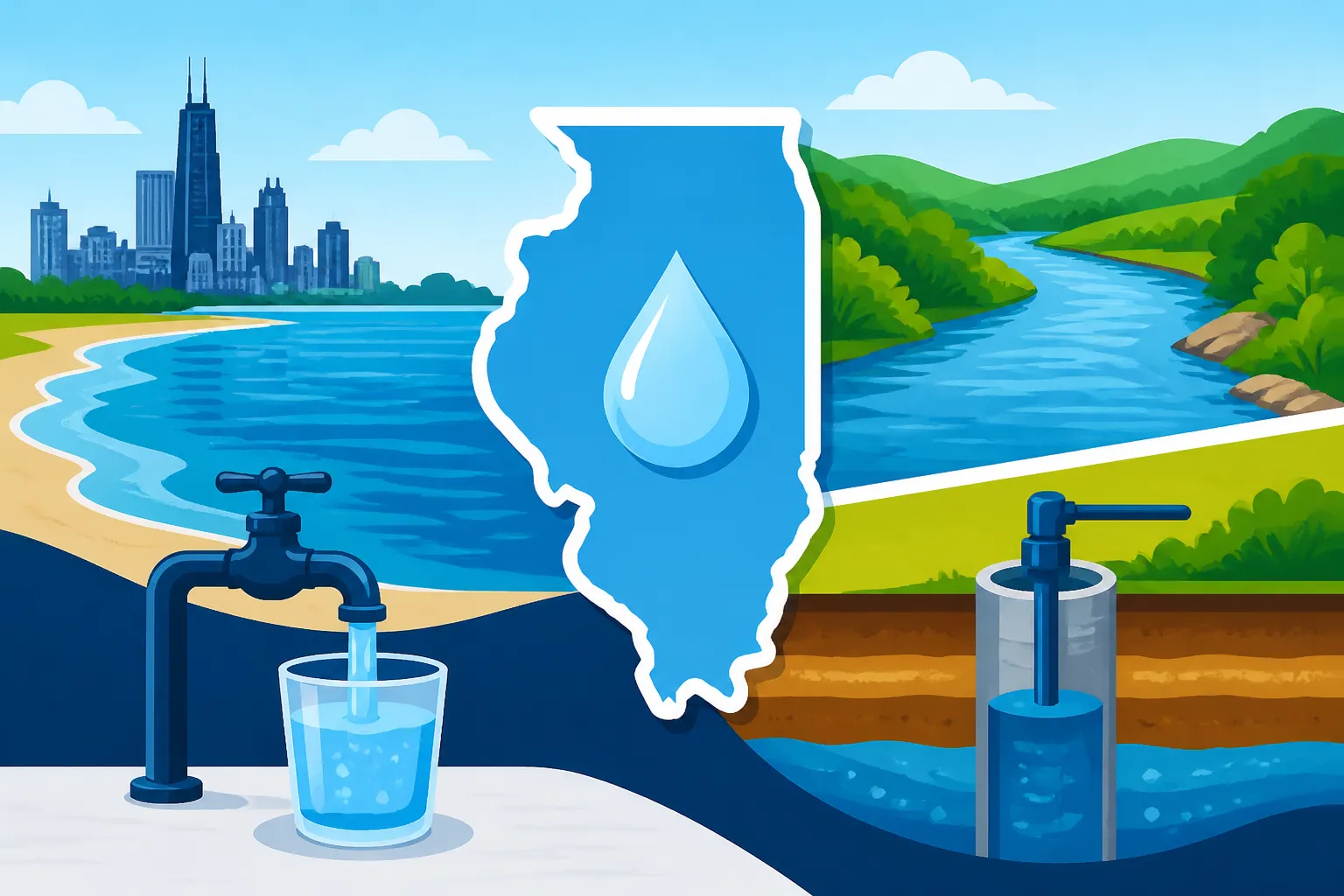
A public water supplier generally draws water from either surface water or groundwater. Surface water includes lakes, rivers and reservoirs; groundwater is pumped from underground through wells. Some communities rely on one source, while others use a blend or change sources as supply conditions and infrastructure change.
The Illinois Environmental Protection Agency describes public water supply wells as drawing water “both from surface water and groundwater.” In practical terms, the distinction is not always as simple as “river water” versus “well water.” A well can draw from an underground water-bearing layer, while a river-fed system may store or manage water in reservoirs before treatment. The source that matters for your tap is the one your supplier actually uses, not just the nearest lake or river.
| Source | What it means | What to check |
|---|---|---|
| Lake | Water is withdrawn from a lake and treated before distribution. | Which supplier draws the water, where it is treated, and whether your community receives it directly or through another supplier. |
| River | Water is taken from a river, sometimes with reservoir storage or other sources in the overall system. | Whether the supplier uses the river alone or combines it with another source. |
| Reservoir | Stored surface water can support a supply drawn from a river or other surface-water system. | How the local supplier describes its source and treatment process. |
| Groundwater well | Water is pumped from an underground source through a well. | Whether the well serves a public system or a private property, and which tests apply to that supply. |
| Blended supply | Water from more than one source may be treated or distributed together. | Whether the mix changes and which report or supplier covers your address. |
A place name can be misleading. A town near a river may get its tap water from wells, and a home far from a lake may receive water drawn from it through a regional supply system. Some communities buy water from a larger supplier rather than operating their own intake or wells. That means the water’s path can cross municipal boundaries before it reaches a household.
For that reason, start with the supplier for your specific address. How to Find Out Who Supplies Water to Your Illinois Address explains how to identify the utility or company responsible for a property. Once you know the supplier, look for its description of the source and treatment, then check whether another supplier provides water wholesale.
Lake Michigan, rivers and reservoirs
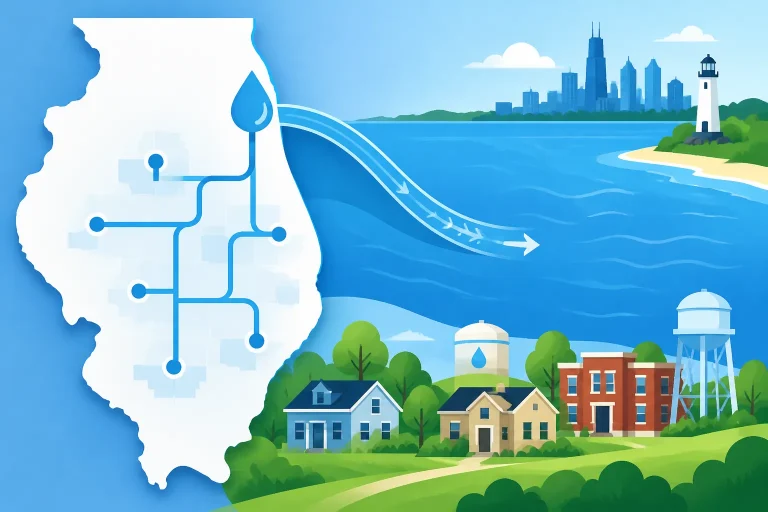
Lake Michigan is a major source for many Illinois communities, especially in the northeastern part of the state. Other public supplies draw from rivers or reservoirs. The source used by a community depends on local infrastructure and decisions about how to provide water to its service area. Nearby geography alone cannot confirm which source reaches a particular address.
When a supplier uses surface water, it withdraws water from a lake, river or reservoir and treats it before sending it through the distribution system. Treatment is designed to address the characteristics of the source and meet drinking water requirements. Because surface water can vary, treatment operators may monitor source conditions and adjust treatment as needed. The details differ among systems, so a supplier’s water quality report is a better guide than assumptions based on what a nearby lake or river looks like.
A river can be part of a larger supply arrangement. A community may draw its own water from a river, receive water from a regional supplier, or use river water alongside wells. Some systems blend sources, and the blend can vary. That is why a general statement like “this town drinks river water” may leave out important details about the supplier, treatment plant and water entering the local distribution network.
Reservoirs can also be part of a surface-water supply. They may store water or form part of the system that delivers it to a treatment plant. The water’s journey from source to tap can include intake structures, treatment facilities, pumping stations, storage and local pipes. From Intake Crib to Kitchen Faucet: How City Water Travels in Illinois describes those parts of the journey, while How Lake Water Is Treated Before It Reaches Your Tap focuses on treatment.
If your supplier uses Lake Michigan water, the broad source does not necessarily tell you how your local water tastes. Treatment choices, source conditions and the pipes that carry water through the community and into a building can all affect what people notice. The same is true for river water. If taste or odor is the concern, compare the supplier’s information with what is happening at your own faucet. Taste and Odor in Illinois Tap Water: A Homeowner’s Guide covers common reasons water may taste or smell different.
Surface water can be part of a regional arrangement rather than a direct local intake. A community may receive water from a neighboring city or a wholesale supplier, then distribute it through its own network. In that case, residents may need to look at more than one organization’s information to understand the full supply chain. How a Regional Water Wholesaler Supplies Suburban Utilities explains the relationship between a regional supplier and the local utility.
For a closer look at how these sources vary around the northeastern part of the state, see Northeastern Illinois Water Sources: Rivers, the Lake and Deep Wells. The important point is that a regional overview can orient you, but it cannot replace checking the supplier assigned to your address.
Groundwater wells and private wells
Groundwater is water held below the surface in soil and rock. A public water system can pump groundwater through wells, treat it as needed and distribute it to customers. A private well also draws groundwater, but it serves an individual property or a smaller arrangement rather than a public system serving customers across a community.
The two types of wells should not be treated as interchangeable. Public water supplies and private wells have different monitoring and reporting arrangements. If a home uses public water, the supplier’s information is the starting point for understanding the community supply. If a home has its own private well, the property owner needs results from testing that well; a nearby town’s water report does not describe it.
Groundwater quality can vary with geology, the depth and construction of a well, and nearby land uses. A public system’s water results describe that system’s supply and sampling, not every private well in the surrounding area. The Illinois Environmental Protection Agency says contamination in a public water supply well may also pose a risk to nearby private wells that “use the same groundwater source.” That is a reason for nearby well owners to seek advice and testing appropriate to their own well rather than assume a public system’s results apply to them.
The Illinois Environmental Protection Agency’s Drinking Water Watch portal provides online information about the quality of water produced by public water supply wells. It can help you find information about a public system that relies on wells, but it is not a substitute for a test of a private well. If the property has a private supply, use resources intended for private well owners, such as Private Well Testing: What to Test For and When and Getting Water Tested in Illinois: Kits, Health Departments and Labs.
A well’s water may need treatment before it is distributed or used. The treatment depends on the water and the system. Some groundwater may require disinfection or other treatment, and some may have naturally occurring minerals or other characteristics that affect taste, odor or staining. A treatment device should be chosen only after the relevant water has been tested and the result has been interpreted. Matching Well Water Treatment to Your Lab Report explains why a test result should guide treatment choices.
Some towns draw groundwater from more than one well or combine well water with another source. A community’s supply may also change over time as infrastructure or water-supply planning changes. Even if you know a town has wells, that alone may not show which well or mixture supplies your street. Look for the supplier’s latest source description and ask the supplier if it is unclear.
If you are comparing a public well system with a private well, keep the records separate. Public-system data can help explain a community’s water, but it does not test the plumbing inside an individual home or establish the condition of a nearby private well. For private wells, the property’s own sample and records are central. Groundwater Wells, Not the River: How Some River Cities Get Water explores why a community’s location near a river does not necessarily mean the river is its source.
How water moves from its source to your faucet
Knowing the source is only part of understanding tap water. Water must travel from an intake or well through treatment and distribution before it reaches a home. Each stage can shape what information is relevant to a resident.
A surface-water system generally withdraws water from its source and sends it through a treatment process. Depending on the system and source conditions, treatment may include screening, steps that help particles gather and settle, filtration and disinfection. Groundwater systems may use different treatment steps, depending on the quality of the water and the system’s design. These are broad descriptions, not a promise that every plant uses the same process.
After treatment, water travels through mains and smaller pipes to homes and businesses. A local utility may operate that network even when another supplier provides the water. Water can also pass through storage facilities or pumping stations on the way. The route varies by system, which is why a source name alone cannot tell you what treatment was used or who maintains the pipes near your home. See Pumping Stations and Mains: How Treated Water Reaches Illinois Suburbs for more on the distribution side.
The pipes in a building matter too. Water quality at a treatment plant and water quality at a particular faucet are not necessarily identical in every respect. Plumbing materials, service lines, fixtures and water that has been sitting in pipes can affect conditions at the tap. For example, a community source report cannot tell you whether a home has a lead service line or plumbing components that may contribute lead. Lead Service Lines in Illinois: The Replacement and Notification Act and How a Building’s Pipes and Service Line Change Illinois Tap Water address those separate parts of the water’s path.
This distinction is useful when a household is deciding whether to investigate the supplier’s water, the building’s plumbing, or both. If a concern appears across a neighborhood, contact the supplier and look for system-wide notices or information. If the concern is limited to one faucet or one building, home plumbing may deserve attention as well. A change in taste or color does not identify the cause by itself.
Water may also move between suppliers. One community can buy water from another and distribute it locally. The supplier that treats the water and the utility that bills the resident may not be the same organization. If you are unsure which report applies, check the local utility’s description of its wholesale supply and confirm which water quality report covers your address.
How to find your source and the right records
The quickest way to make sense of your water is to move from the address outward: identify the supplier, confirm the source, then find the report or test that applies to your type of supply. A town-wide description is useful background, but it may not be precise enough for a home served by a different utility or a private well.
Confirm the supplier for your address
Start with a water bill, lease or property records if available. These can identify the organization responsible for water service, though a bill may not explain where the water originates. If the account is managed by a landlord or included in another utility bill, ask the property owner or manager who supplies the water. You can also use the steps in How to Find Out Who Supplies Water to Your Illinois Address.
If the supplier buys water from another system, identify both organizations. The local utility may be your point of contact for service problems, while the wholesale supplier may operate the source or treatment facility. Ask which organization’s report covers your address and whether the local utility blends or supplements the purchased supply.
Read the source description and report
Once you know the supplier, look for its current water quality report and the section describing the source. The report can help you distinguish surface water from groundwater and identify whether the supplier describes a blended or purchased supply. If the wording is unclear, contact the supplier using the current contact information on its official website.
A report is valuable, but it has limits. It describes the public system and the monitoring information included in that report. It does not establish the condition of every home’s plumbing, and it does not stand in for a private well test. Consumer Confidence Reports in Illinois: Reading Your Water Report explains how to read the information a public water supplier provides.
If your supplier uses public water supply wells, the Illinois Environmental Protection Agency’s Drinking Water Watch portal provides online information about the quality of water those wells produce. The Illinois Environmental Protection Agency also lists the “Source Water Assessment Program (SWAP),” which provides source-water assessment information. These resources can add context about a public supply, but they do not replace the supplier’s current report or a test tailored to a private well.
Match the record to the type of supply
Use the record that fits the actual water source:
- For a public water system, start with the supplier’s water quality report and any current notices.
- For a public supply that uses wells, consult the supplier’s information and the Illinois Environmental Protection Agency’s Drinking Water Watch portal.
- For a private well, arrange testing of that well and keep the results with the property’s records.
- For a home with a specific plumbing concern, investigate the plumbing or service line separately from the community source.
- For a rental, ask the owner or manager to confirm whether the home is connected to public water or uses a private well.
If a report mentions a contaminant or a monitoring result you do not understand, avoid drawing conclusions from a single line without context. Check the sample point, date, units and the report’s explanation. For private-well results, consult the appropriate local health department or a qualified water professional. For questions about health effects, ask a medical professional or local health department.
Why sources and supply arrangements can change
A community’s water source is not always permanent. A supplier may plan for future demand, maintain or expand infrastructure, or consider a different source. A switch can require planning and construction before water reaches customers, and the change may involve coordination among communities and suppliers. Residents may hear about a proposed project well before it affects their tap.
Planning matters because a source must be able to meet the needs of the area it serves. The Illinois Department of Natural Resources says the Illinois State Water Survey developed “Tier 1 water supply and demand analysis reports for each RWSPC.” The Illinois Department of Natural Resources also works with the “Illinois State Water Survey (ISWS)” to assess available surface water and groundwater quantities. These assessments help inform regional water-supply planning; they do not by themselves tell a resident which source currently serves a particular address.
A switch may also affect treatment, operations and the way a utility explains its supply. It does not automatically mean water will taste different or that a treatment device is needed. If a supplier announces a source change, look for its explanation of the new source, treatment and any steps customers should take. Switching a City From Wells to Lake Water: The Project Stages covers the planning and implementation side, while Will Tap Water Taste Different After a City Switches Sources? addresses what residents may notice.
Blending can make source changes less obvious. A utility may use more than one source or adjust how sources contribute to the supply. The source description in a report is more useful than trying to infer a change from a taste difference alone. If you notice a change, check for a utility notice and ask the supplier whether it is related to source, treatment or maintenance.
Some changes happen upstream, at a wholesale supplier or regional system, rather than at the local utility. If the local utility says it buys water, ask whether the wholesale supplier has issued information about its source or treatment. When a City Blends River Water With Shallow and Deep Wells offers an example of why a community’s source description may need to account for more than one source.
What the source can—and cannot—tell you
The source is a helpful starting point, but it is not a safety verdict. A lake, river or well does not tell you by itself whether water meets applicable requirements, what treatment it receives, or what is happening inside the plumbing of a specific home. Those questions require different records and, in some cases, testing.
A public water source is treated and monitored within a public supply system. The supplier’s report and notices are the place to check for system information. A source-water assessment can provide background about the source area and potential vulnerabilities, but it is not a result from every tap. Source Water Assessments in Illinois: How Susceptible Is Your Supply? explains what that type of assessment can and cannot show.
For private wells, source information is even more specific to the property. A nearby public well’s data does not guarantee that a private well has the same construction, depth, groundwater conditions or quality. Although a shared groundwater source can make nearby wells relevant to one another, each private well still needs its own appropriate evaluation. Do not assume a public-system report applies to a private supply.
The source also cannot identify a problem that comes from household plumbing. A home may receive treated public water and still have a concern related to its own service line, pipes or fixtures. Conversely, a taste or odor complaint does not prove that the source is contaminated. The right next step depends on the pattern of the issue, the supplier’s information and the tests appropriate to the concern.
A practical approach is to separate the questions:
- Who supplies the water? Confirm the utility or company for the address.
- Where does it come from? Check the supplier’s source description.
- How is it treated and monitored? Read the supplier’s report and notices.
- Could the home’s plumbing matter? Check the service line and interior plumbing.
- Is the property on a private well? Test that well rather than relying on a municipal report.
That approach keeps source information in its proper role: a way to understand the system supplying water, not a substitute for checking the report, plumbing or private well that applies to your home.
Frequently Asked Questions
Does living near a river mean my tap water comes from it?
No. A community near a river may use wells, buy water from another supplier or use a combination of sources. Confirm the supplier and source for your address rather than relying on nearby geography.
Does a public water report describe a private well?
No. A public water report describes the public system it covers. A private well needs testing specific to that well and property.
Can two nearby homes have different water sources?
Yes. They may be served by different utilities, or one may use public water while the other has a private well. Check the supplier or water-system arrangement for each address.
Does a source change mean I need a home filter?
Not by itself. First check the supplier’s explanation, current water report and any relevant home test results. If considering a filter, match its certified reduction claims to the concern shown by those results.
Sources
- Illinois Environmental Protection Agency — Drinking Water (checked November 13, 2026)
- Illinois Environmental Protection Agency — Drinking Water & Water Quality (checked November 13, 2026)
- Illinois Environmental Protection Agency — Water Quality (checked November 13, 2026)
- Illinois Department of Natural Resources — Water Supply (checked November 13, 2026)
Disclaimer
This article is for general informational purposes only and does not constitute professional advice. Laws, prices and regulations vary by location and change over time. Consult a qualified professional for guidance on your specific situation. Illinois Water Guide is not a government agency or water utility and is not affiliated with any public water system.